

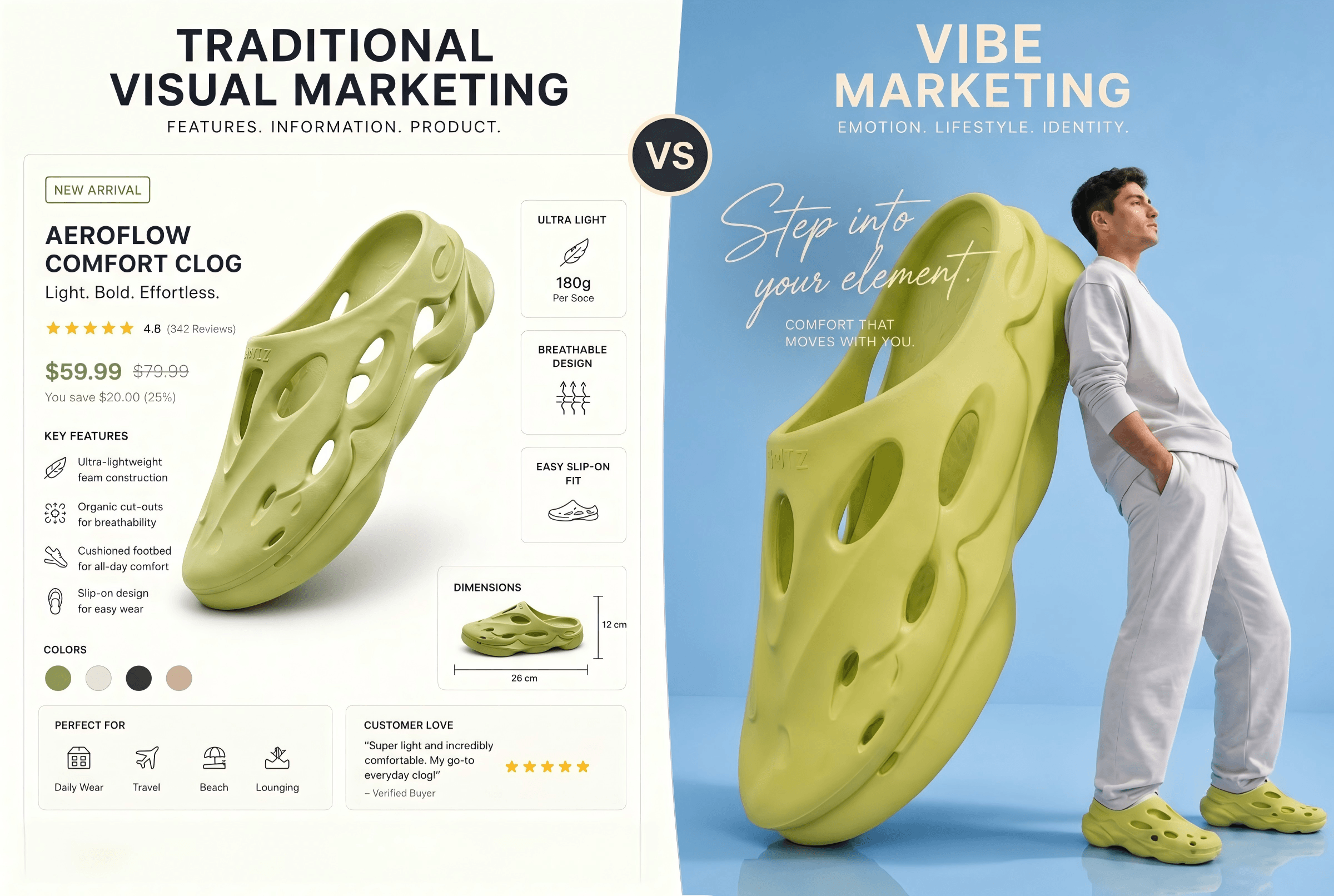
Marketing is starting to feel different. Just as vibe coding, a revolutionary technology that empowers almost everyone to build their own app through natural language, vibe marketing is changing how brands create visual content and quickly helping them create "vibe-filled", aesthetic visuals with their natural words. Instead of starting with rigid briefs or expensive production, brands now start with a feeling, lifestyle, or cultural signal—the “vibe” they want people to connect with.
Vibe marketing is not just about saying “buy this product.” It is about making people feel, “this belongs in my life.” With AI platforms like Fotor, brands can turn rough ideas, product photos, or simple prompts into studio-quality visuals, videos, and campaign-ready assets faster and with less effort.
So, how is vibe marketing different from traditional visual marketing, and how can brands create visuals that make this strategy work?
What is vibe marketing?
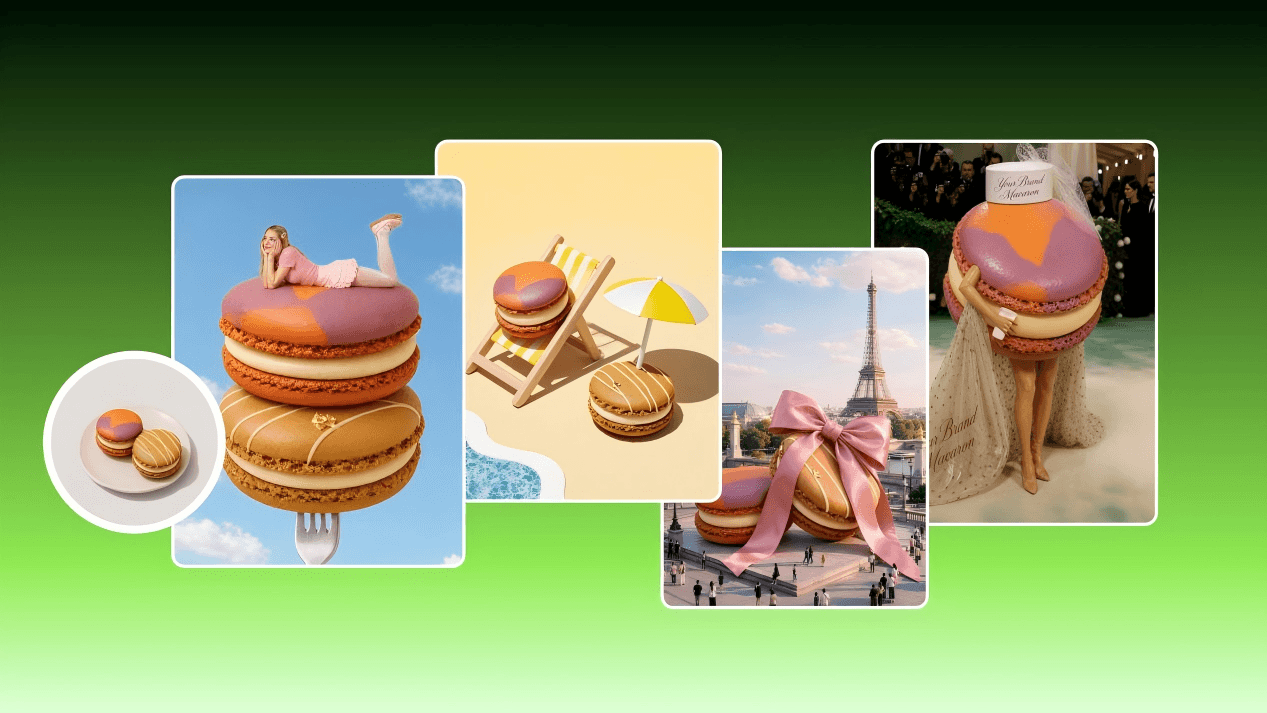
In terms of a marketing strategy, vibe marketing is an emotion-first marketing approach that focuses on aesthetics, mood, identity, and cultural resonance rather than direct product selling. That is to say, instead of aggressively promoting features or specifications, vibe marketing sells a feeling. The goal is to make audiences think:
- “This brand understands me.”
- “I want this lifestyle.”
- “This aesthetic fits my personality.”
Therefore, compared with traditional advertisements, vibe marketing often feels more like a mood board, a relatable social post, a cinematic montage or a trending TikTok short film. The content will usually be subtle, emotionally driven and visually aesthetic.
For marketers, vibe marketing is q visual-driven approach where you bring the idea, and AI scales it into on-brand, studio-quality visual content that actually sells across every channel instantly.
With Fotor’s AI Vibe Marketing platform, brands can turn rough ideas into studio-level visuals, scroll-stopping videos and ready-to-launch marketing assets without relying on a large production team, expensive model shoots or complex editing workflows. Instead of spending weeks coordinating designers, photographers, and editors, a small business team, and even an individual, can launch a cohesive, high-quality visual marketing campaign within days, significantly improving both production efficiency and creative flexibility.
Why vibe marketing works so well today?
The success of vibe marketing is attributable to its alignment with how people consume content in modern digital environments.
People buy emotions before features
Nowadays, people often buy things based on how they feel and find reasons to justify their choices later. Vibe marketing often creates elements like desire, aspiration, identity attachment and lifestyle association, which can lead to strong emotions and purchase behaviors.
Take coffee as an example. People won’t buy coffee anymore if a brand mentions flavour or quality alone. They will buy cozy morning vibes, productive work aesthetics, minimalist lifestyles or soft luxury experiences behind the product. Vibe marketing is about understanding how people feel and what they want, so it connects with people on a level, which is all, about emotional psychology.
Social media rewards engagement
Platforms give more chances for content that keeps users watching, interacting and sharing. Emotionally engaging content tends to generate more watch time, saves, comments and reposts. Vibe marketing is naturally optimized for these engagement metrics.
Short attention spans favor instant emotional impact
Nowadays, modern audiences decide whether content is interesting within seconds. Vibe marketing quickly delivers mood-related information with the proper emotional tone rather than emotionless, lengthy explanations.
AI moves creative barriers away
AI tools make it dramatically easier for brands and creators to generate creative visuals, such as cinematic visuals, stylized product imagery, AI short videos, mood-based graphics and filter-edited photos. They can now enable small businesses to create visually compelling campaigns without expensive production teams.
Vibe Marketing vs. Traditional Visual Marketing: Key Differences
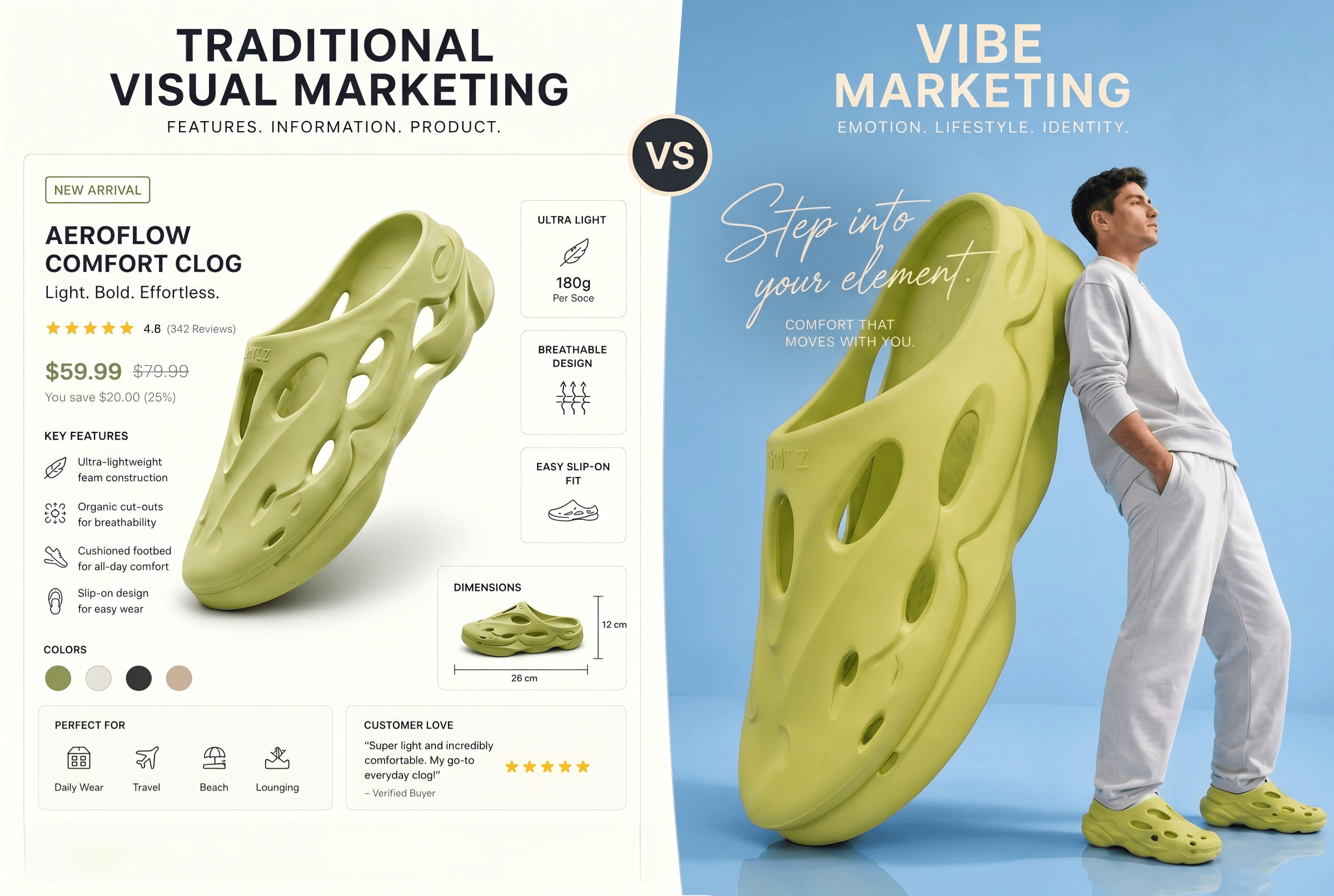
Although both approaches aim to attract customers visually, there are big differences between them. Here are the details:
1. Emotional Vibe vs. Clear Communication
One of the biggest differences is what each strategy highlights. Focusing on emotion vibe, vibe marketing is designed to create an emotional atmosphere, giving a visual cinematic, aesthetic, aspirational and mood-driven sense. When seeing it, the audience will always feel something before they think analytically about the product.
Traditional visual marketing attaches importance to clarity. It often gives priority to clear information, strong messaging, product understanding and direct communication. After seeing these marketing materials, the audience will immediately understand what the product is, why it matters and what action to take next.
For example, the descriptions, like “This coffee is organic,” will be a less strong strategy in vibe marketing. Instead, it will show sunny café scenes, accompanied by soft jazz music, slow-motion latte pouring, warm cinematic lighting and more. The product will be portrayed as part of a lifestyle story.
2. Authenticity vs. Professional Polish
Vibe marketing embraces imperfection since it will give the audience a casual, raw, human and “less designed” feeling. It becomes growingly prevalent due to their distrust of “overly corporate” content.
Traditional visual marketing, however, values corporate control, prioritizing polished presentation. So, every detail in such strategies is usually carefully managed, such as lighting, composition, branding, typography and post production, which creates a sense of professionalism and reliability.
3. Fast Exports vs. Structured Production
Another big trait of vibe marketing is its fast visual generation, making it quickly respond to ever-changing marketing trends. Thanks to the heavy involvement of AI tools, brands embracing vibe marketing can instantly generate multiple versions of content, fast social feeds and AI-assisted visual experiments. For vibe marketing, speed matters more than perfection.
Traditional visual marketing usually requires longer workflows, which typically involve planning, creative approvals, professional design and editing and structured timelines. The production cycle is slower but usually more controlled.
4. Social Engagement vs. Conversion Focus
Vibe Marketing is optimized to capture attention in modern social media scenarios, so it performs especially well in discovery-focused social feeds, highly effective at generating shares, saves, comments, watching time and emotional engagement.
Traditional visual marketing is generally optimized for sales, as it is devoted to click-through rates, purchase behavior, lead generation and conversion efficiency. Therefore, it is useful for paid ads and print materials.
5. Lifestyle Selling vs. Product Selling
In vibe marketing, identity is the selling point, so the product is often secondary to the emotional experience. The real message becomes “This is who you could be” and “This lifestyle fits you.” Hence, consumers connect emotionally with the atmosphere surrounding the product.
In traditional visual marketing, the features and benefits of a product will be the central topic. It invariably directly communicates product value, functionality, specifications and competitive advantages. The central focus will be the product itself rather than what it brings to the customers emotionally.
6. Trend-Driven vs. Brand-Controlled
Vibe Marketing can change rapidly and conveniently due to its heavy dependence on internet culture, an area that evolves constantly. So, brands embracing vibe marketing frequently adapt to new editing trends, viral visual formats, social meme culture and platform-based aesthetics. For this marketing strategy, flexibility is the key.
Traditional visual marketing usually maintains consistency, following strict branding systems to ensure stable visual identity, professional recognition and cross-channel consistency. Such a structure is what large companies especially rely on.
7. Short-Term Virality vs. Long-Term Brand Stability
Vibe Marketing is intended for fast attention. Since trend-based content can generate huge engagement and fade quickly, some of the campaigns can win plenty of attention at first and feel outdated within weeks. This requires swift visual creation powered by AI tools.
Traditional visual marketing builds long-term recognition. Professional brand systems are more evergreen as they effectively support long-term customer trust, stable brand identity and consistent visual communication.
Here is a summary of how vibe marketing and traditional visual marketing operate differently.
| Factor | Vibe Marketing | Traditional Visual Marketing |
| Main Goal | Emotional connection | Clear communication & conversion |
| Visual Style | Casual, trendy, aesthetic | Polished, structured |
| Production Speed | Fast, convenient and efficient | Slow, planning-involved, inefficient |
| Platform Focus | TikTok, Reels, Shorts | Websites, ads, print |
| Audience Response | Emotional relatability & engagement | Trust & professionalism |
| Content Lifespan | Short-term trends | Long-term messages |
| Workflow | Small team or one person with AI tools & flexible operations | Large team composed of several departments in charge of planning, photography & video shooting, post production, visual uploading and management |
| Cost | Cost-saving | Costly budget |
We can’t say which strategy is better. However, you can make your decision based on the following metrics:
- Audience behavior
- Platform
- Industry
- Campaign objective
- Brand positioning
Which Strategy Should You Choose?
You should let your goal guide you to find a suitable strategy. However,
Usually choose vibe marketing if:
- Your audience is highly active on social media
- Organic reach is what you primarily need
- Your brand identity is aesthetic-driven
- You want to move quickly with trends
- Emotional engagement matters most
Always prefer traditional visual marketing if:
- You target strong trust signals
- You operate in the professional industries, such as financial services, healthcare businesses, real estate and B2B services
- You value brand consistency
- Your campaigns are conversion-focused
- Product message clarity matters most
So, is there a tool able to assist me in generating suitable visuals for vibe marketing, especially designed for individuals and small businesses? Well, yes. Please continue your reading to know the solution.
How AI Makes Vibe Marketing Easier?
Vibe marketing requires a large amount of visual output. Brands need product images, lifestyle scenes, short videos, listing assets, social posts, ad creatives, seasonal campaigns, and trend-inspired variations.
For small teams, this can be difficult. Traditional production is often too slow and expensive to support constant creative testing.
AI changes this workflow. Instead of starting every campaign from scratch, brands can use AI to find product photography ideas, generate real product visuals, create videos, test moods, apply brand styles and produce multiple variations from a single product image or prompt.
This makes vibe marketing more practical. It allows brands to move from “we have an idea” to “we have usable visuals” much faster.
Fotor: Best AI Vibe Marketing Tool for Scalable Visual Creation
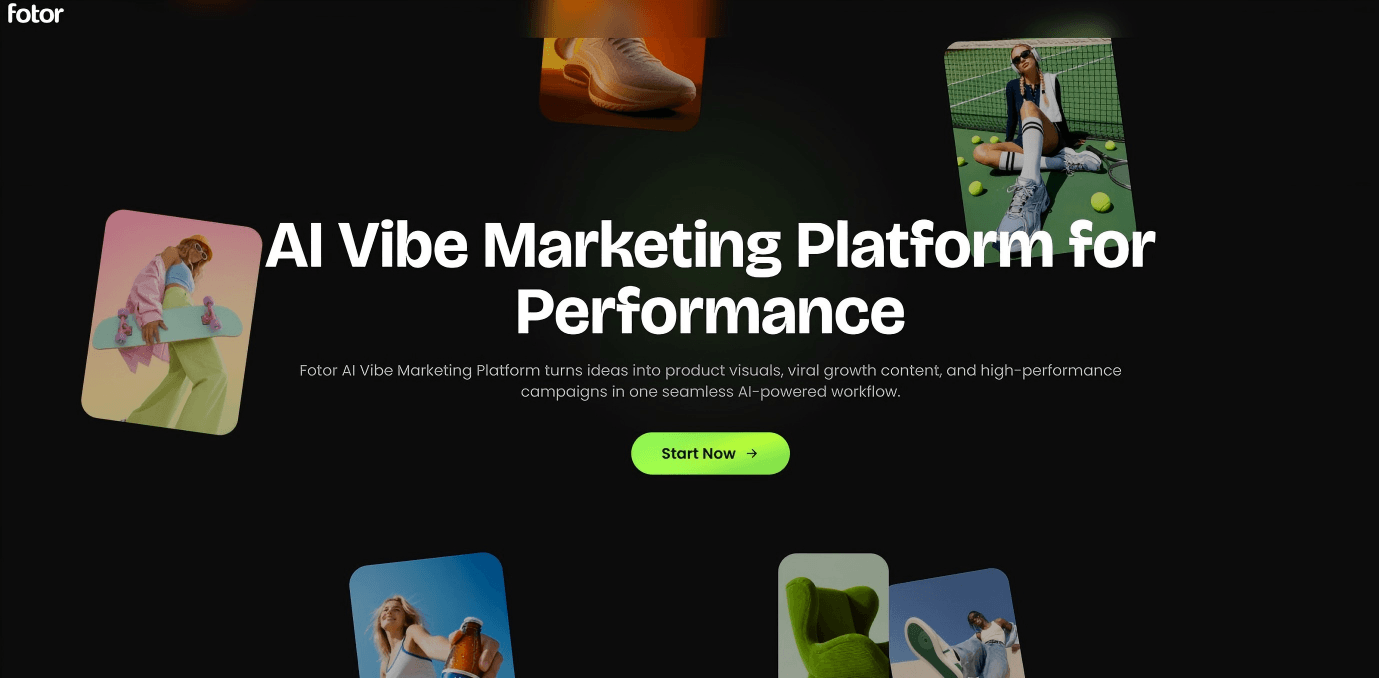
As mentioned above, smart modern marketers need handy AI tools that can handle both fast-moving social aesthetics and polished professional editing. This is where Fotor comes to the rescue.
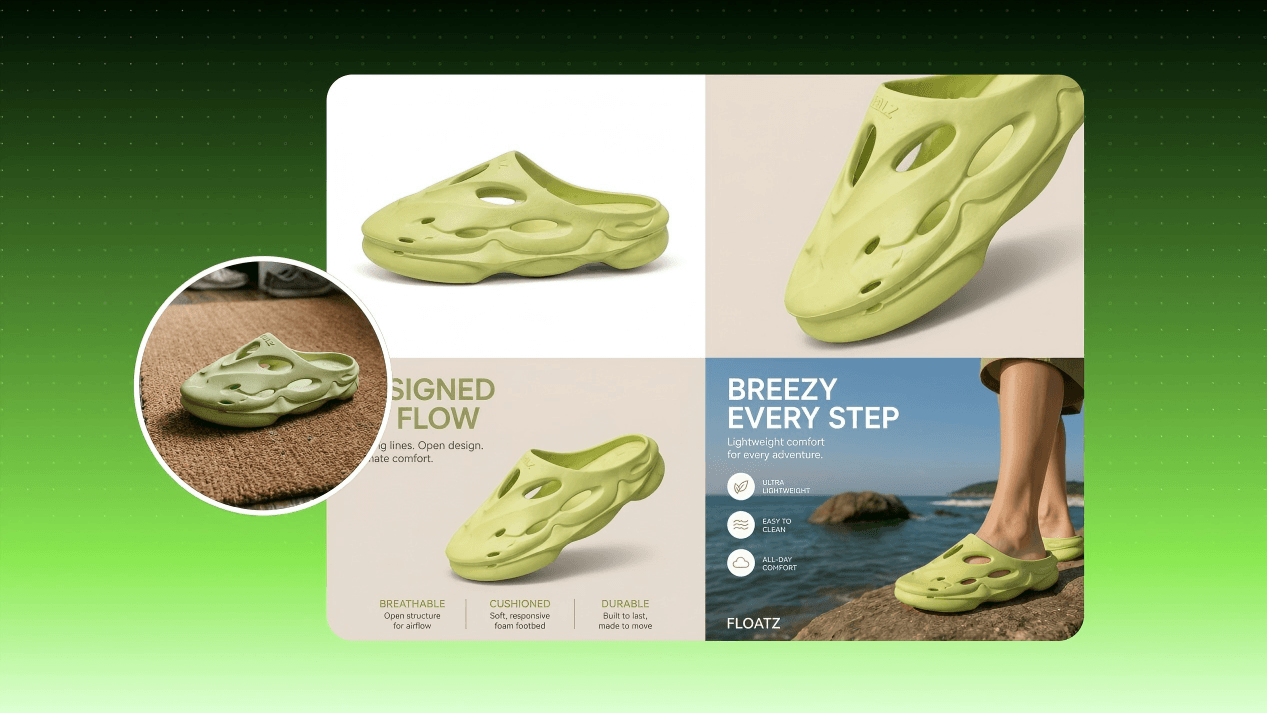
With Fotor’s AI Vibe Marketing Platform, users can turn raw product photos, flat lay images, links, or simple text prompts into professional product visuals, social content, videos, and campaign-ready marketing assets. Also, new start-ups can rely on it to effectively create your brand identity.
For small businesses, e-commerce sellers, solo entrepreneurs, and lean marketing teams, this is especially useful. They can create product visuals that look polished, emotional, and platform-ready without hiring a full creative team or managing complex production workflows.
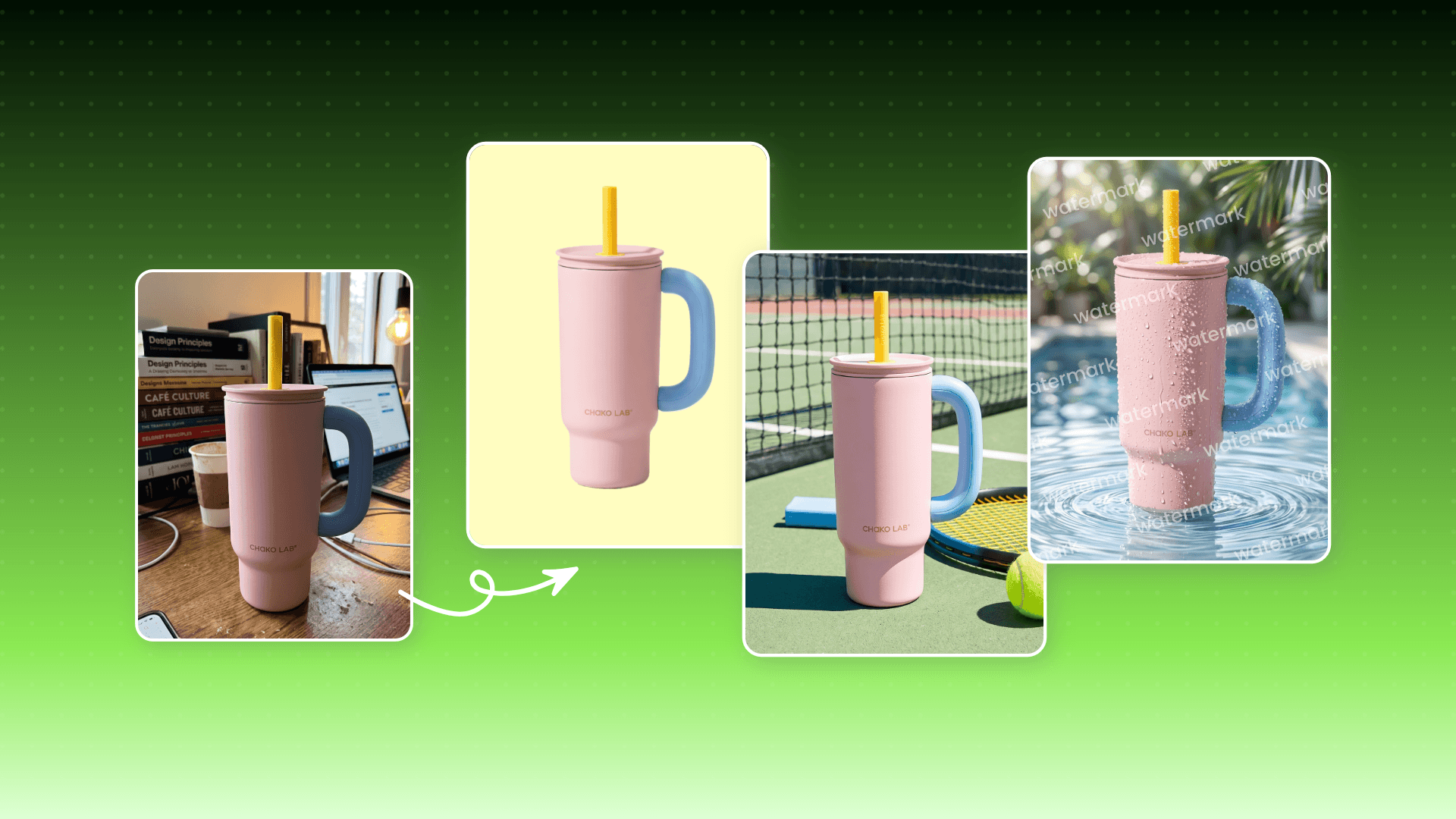
*Product Visuals Suite for still product & marketing visuals
*Growth Visuals Suite for dynamic product & marketing visuals
*Batch image editing and brand asset management
How Does Fotor Facilitate Vibe Marketing?
Fotor’s AI Vibe Marketing Platform is designed to help beginners, experienced marketers, and small business owners quickly create static and dynamic product visuals without complex editing skills. Users can simply upload raw product photos, flat lay images, or describe their ideas in words, and Fotor can turn them into professional, emotion-driven product photos and videos ready for different marketing scenarios.
| Scenario | Tool | Function |
| Product Photography | Product Shot | Turn random images into ready-to-use product visuals. Diverse scene-based backgrounds and aspect ratios available. |
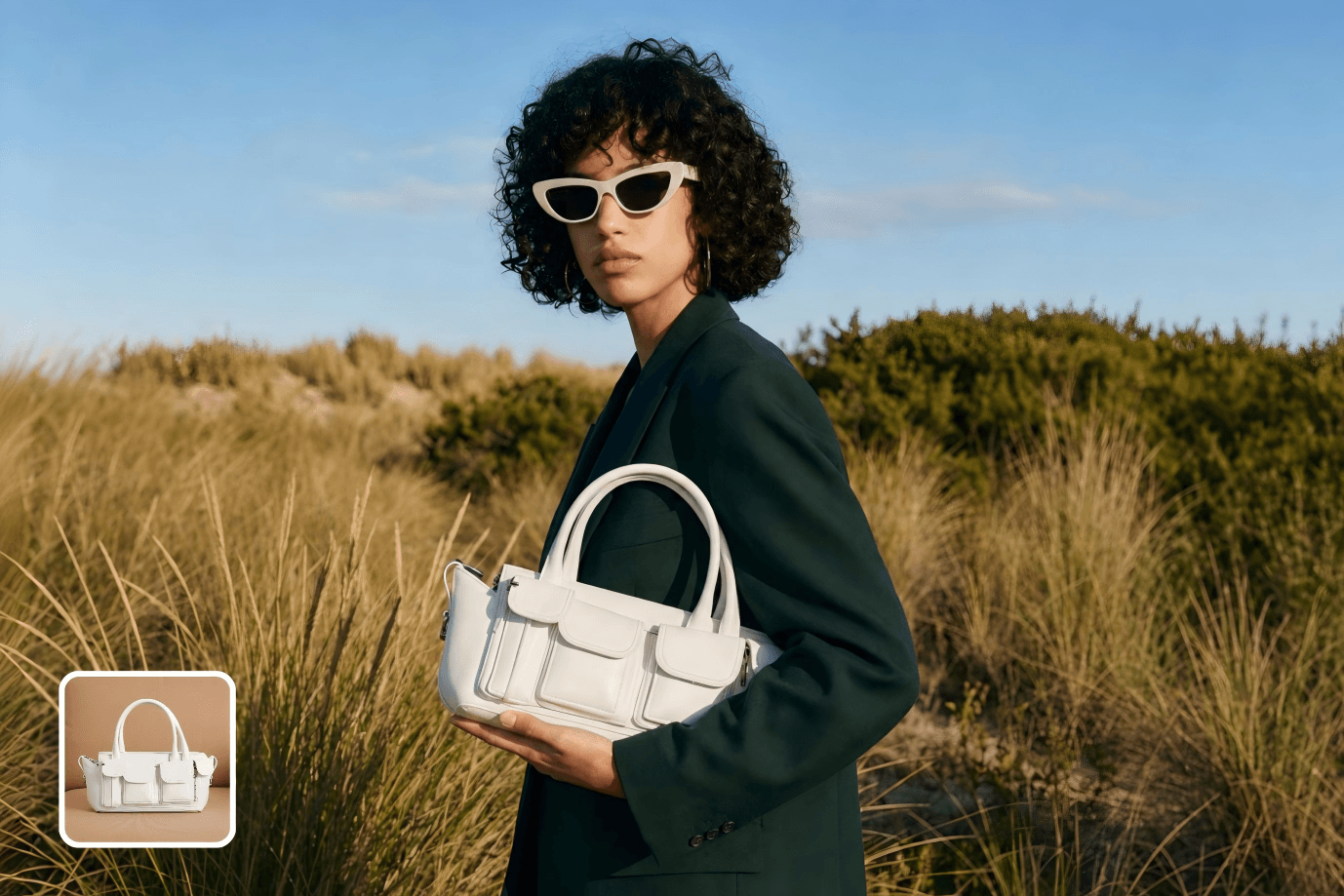
| On-Model Photography & Video | Virtual Model & Video Try-on | Convert flatlay product images to model photos or videos. Choose from different models (gender, age, skin colors, body shapes, etc.) to better display your products. |
| E-Commerce Listing | Smart Product Listing | Use Fotor as an AI listing generator to transform your prepared product images into ready-to-use product listings (visuals+auto copies) for mainstream e-commerce platforms like Amazon, eBay, Shopify, Shopee, Target, Shein and more. |
| Product Videos for Listings | URL to Video | Create professional, scenario-based product videos or ads from your product links, including product display, product review, UGC videos and more. |
| Marketing Campaign | AI Marketing Video | Change still product photos to unique marketing videos. Use your natural words to make it displayed or promoted in your desired way. |
| Product Mockups | AI Image Generator | Visualize creative product mockups or imagery from your ideas or raw product images and quickly test image or mockup variations. |
| Social Media or Trend-Inspired Content | AI Video Generator | Generate one-of-a-kind, dynamic product visuals that match social trends from simple words or existing photos and get HD, cinematic product videos powered by advanced AI models like PixVerse, Kling 3.0, Seendance, etc. |
| Marketing Copies | AI Agent | Export professional marketing or commercial copies with the wanted tone or emotion to target your audience. |
| Visual Mood Experimentation | Go Art | Explore a range of photo effects or filters to test multiple creative directions and give your visuals the right aesthetic mood, such as retro, anime, line drawing, glitch, overexposure and more. |
Final Thoughts
Vibe marketing is genuinely sweeping the world owing to its simplicity, convenience and high efficiency. Undoubtedly, it is more time-saving, budget-friendly and efficiency-boosting compared with traditional visual marketing. Though it has become an unstoppable trend in the modern workplace, it is absolutely not replacing traditional visual marketing.
So, tools like Fotor's AI Vibe Marketing platform will be a smart choice for modern brands since it makes both marketing campaigns, particularly vibe marketing, much more convenient, helping professional and new marketers create aesthetic social visuals, AI-generated creative content and polished professional marketing assets within an easier and faster workflow.